 Dale Hurley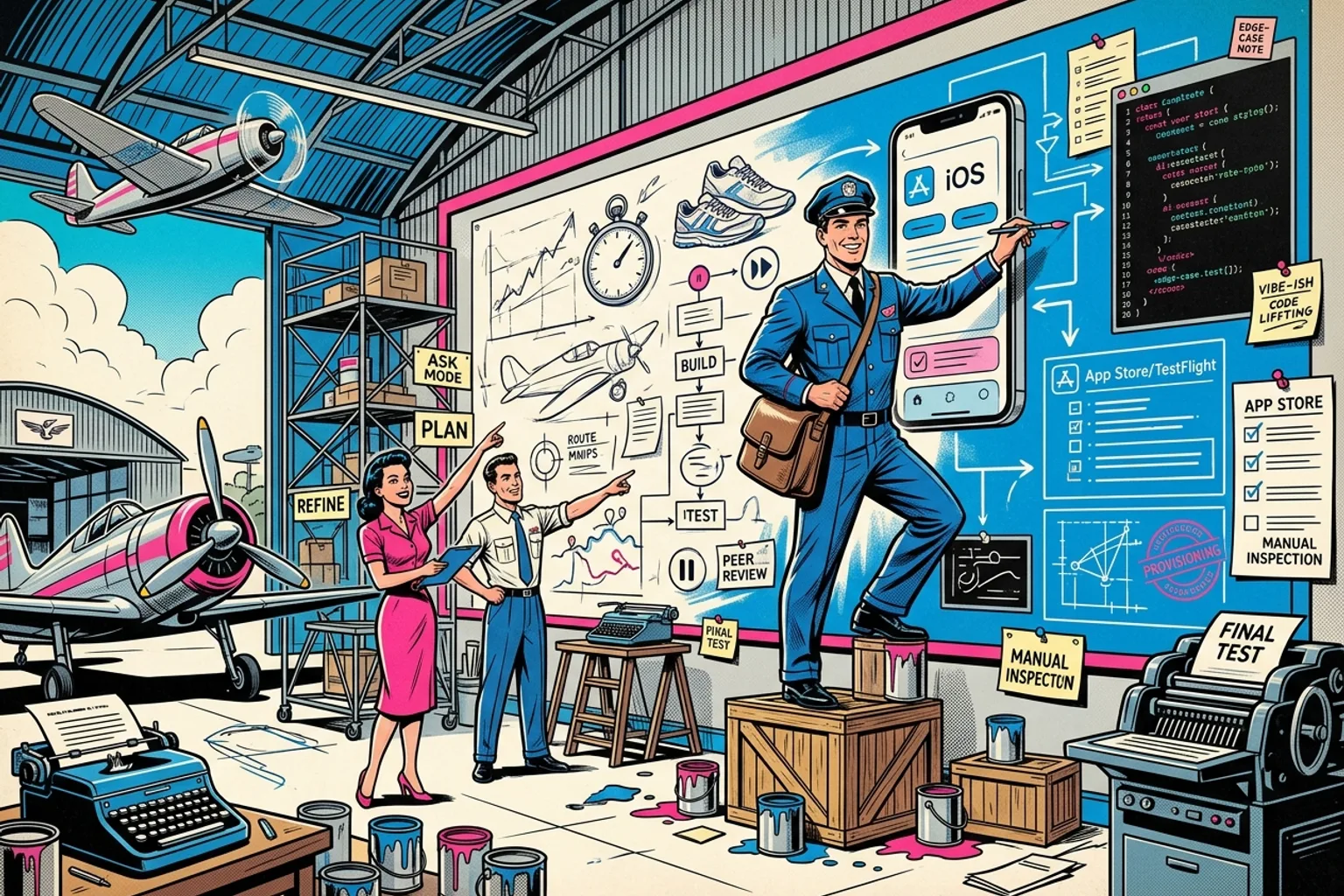
I just built an iOS app solo. It has never been easier. Models like Claude Opus 4.6 and GPT-5.4 are genuinely impressive, and with the right process you can ship incredible apps on your own.
You Still Need to Be a Developer
This only worked because I’m a techie who has built apps before. The coding agents got stuck on complex problems 50+ times. App Store submission, TestFlight, provisioning profiles — all of that required real developer knowledge. There is no way you could take the developer out of the loop.
Domain Knowledge Is a Superpower
I’ve been using my current running app 3–5 times a week for 16 years, and I’ve experimented with plenty of others. I know exactly what matters, what’s frustrating, and what feels right. That intuition made every decision faster.
Systems Thinking Still Matters
Being deeply technical, I could instantly spot shortcuts the coding agents took and things that didn’t look right. I was able to apply systems thinking to fix edge cases the AI missed — like how to handle pauses mid-run.
The Process
- User Stories — Get Claude to write detailed user stories, then expand each one individually.
- Ask Mode — Seed the AI. Paste in the expanded user story. Ask questions: “What are best practices for X?”, “What are the alternatives?”
- Plan — Get the AI to build a detailed implementation plan.
- Build — Hit build.
- Refine — Ask the AI to suggest and implement 15 improvements to UI, UX, copy, and features.
- Test — Ask the AI coding assistant to test and fix.
- Peer Review — Ask the AI coding assistant to peer code review.
- Manual Inspection — Manually inspect the code and refine.
- Final Test — Run a final end-to-end test pass.
- Deploy — Ship it.
It’s not pure vibe coding. It’s vibe-ish — AI does the heavy lifting, but developer judgement drives every step.